Basic HTML Version


Chapter 24 — 3
If the compressor is operated in an unclean environment,
dust
(and chemical vapours) can
find its way into the diver's air causing abnormal wear on the moving parts of both the
compressor and the regulator.
Water vapour
must be removed from the air delivered
from the compressor or it can condense in the scuba
cylinder causing rust, or allow the regulator to freeze up
during diving in cold conditions.
Most compressors have a
filtration system
both on the
inlet side to prevent the intake of dust, and on the outlet
side to filter out oil and water vapour. Their efficiency
depends on regular maintenance and the absence of
over-loading.
Occasionally contamination comes from the destruction
of the filters and lubrication systems. Non-hydrocarbon
based lubricants with high "flash points' are preferable.
The problems of oil lubrication can be overcome by
using a compressor which is lubricated with water or dry
Teflon materials. Unfortunately the expense of these is
beyond the reach of many air suppliers. Diaphragm
pumps also avoid the problem of oil lubrication but are
also very expensive.
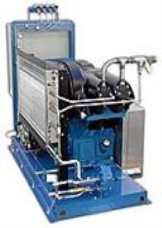
Fig. 24.2
A modern air compressor
CLINICAL FEATURES
Contaminated air may have an unusual taste or smell, or alternately, it may appear quite
normal.
As many of the divers may obtain their air supply from the same source, it is not uncommon
for similar symptoms to be spread amongst the diving group. As only the most serious case
may present, the other divers should be interrogated for similar but less severe symptoms.
• Oxides of nitrogen
cause lung damage, which is likely to cause coughing, wheezing,
shortness of breath and/or tightness in the chest.
• Carbon monoxide
causes headache and unconsciousness – a detailed description can be
found in Chapter 23.
• Oil
can cause nausea, vomiting, chest pain, shortness of breath, coughing and pneumonia.
• Trichloroethylene and other aliphatic halogens
can cause respiratory and
gastrointestinal symptoms.