Basic HTML Version


Chapter 29 — 2
pointed downwards. This type of behaviour is the signal for the diver who wishes to
experience old age, to depart the area.
The Great White shark has a "
bit and spit
"
technique
in which a single sudden powerful
attack is made, with the shark then retreating until the victim (seal, dolphin, diver)
haemorrhages in the water and loses consciousness. The shark can then feed without fear of
damage from a counter attack.
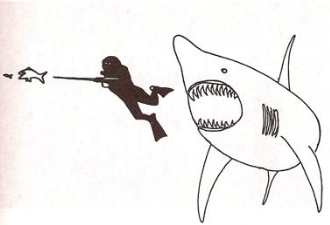
Fig. 29.1
Clinical Features
The seriousness of the injury depends on the size of the shark and the ferocity of the attack.
Sharks larger than 2 metres in length have extremely powerful jaws equipped with razor
sharp teeth which are easily capable of severing limbs or biting large pieces out of the torso.
In spite of this, there have been many instances of divers surviving bites from sharks in
excess of 4 metres in length. In some of these, the divers sustained severe lacerations from the
puncture wounds of the teeth but no further injury. A shark of this size could easily bite a
diver in two, so it appears that in some cases the shark will maul a victim and then not
persevere, perhaps due to distaste for wet suit material or other items of the divers
paraphernalia. Some divers may be as distasteful to sharks as they are to non-divers.
The blood loss from the massive lacerations accompanying shark attack is severe and
immediate. Major blood vessels are frequently torn and generalised bleeding issues from the
tissue laceration. Blood loss is often torrential and pulsates from severed arteries.
The victim will display clinical features of severe blood loss — pale clammy skin, a rapid
weak pulse, low blood pressure and rapid respiration. Fatality occurs in 25% of cases.
Treatment
The principles of successful management of shark attack victims were first described by
Australian and South African authorities following their combined experiences. They are: