Basic HTML Version


Chapter 29 — 6
An
antivenom
against the Chironex box jellyfish may neutralize some of the venom present
in the victim's body. It has been developed by the Commonwealth Serum Laboratories (CSL
Australia) and may be used in severe cases to prevent cardiovascular collapse, or where
significant local scarring is threatened. It may not be as effective against other box jellyfish.
Prevention
The practice of covering as much exposed skin as possible by the wearing of a face mask, wet
suit and hood, overalls or a Lycra suit, prevents the access of tentacles to the skin. This
protection also reduces the risks of stings from other jellyfish and injuries from corals. Even
water repellent skin preparations, such as sun-burn oils and creams, may reduce the danger.
OTHER JELLYFISH STINGS
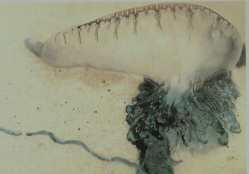
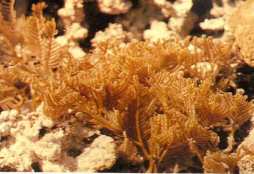
Several other stinging jellyfish such as the
Portuguese Man-of-War,
fire coral
and
stinging
hydroids
can produce painful and sometimes incapacitating stings, although they are unlikely
to be lethal.
The same technique of general management as described for box jellyfish should be followed
(rescue, resuscitation etc. See Chapter 42). However, different local applications seem to
work for different species. Vinegar or alcohol may cause further nematocyst discharge in
some jellyfish stings. Some degree of pain relief can be afforded by the application of
local
anaesthetic
(e.g. lignocaine ointment) to the stung area. Other preparations which have a
variable effect, include "Stingose", "Stop-Itch", Tannic Acid Spray, etc. Any
anti-burn
preparation, including ice packs, may give some relief. More recently, application of heat
(about 45
0
C. as for fish stings – see later) has been shown to alleviate some jellyfish stings.
Fig 29.4
Physalia (Blue Bottle, Man-of-War)
Fig 29.5
Stinging Hydroid