Basic HTML Version


Chapter 29 — 9
The first aid
basic life support
measures (see Chapter 42) may keep the patient alive until the
respiratory paralysis has worn off. This may involve many hours of artificial respiration.
BLUE RINGED OCTOPUS
This attractive little animal is found in rock crevices along the water's edge of many islands in
the Pacific and Indian oceans, as well as in deeper water. If annoyed it will display a
colourful array of blue or purple rings on its skin. This may arouse the curiosity of a potential
victim, especially a child.
Unfortunately it can inflict a small, relatively painless, bite and inject venom through a beak
at the base of its tentacles. The bite may go unnoticed by the victim until the major effects of
the venom develop.
The injected venom can produce general muscular paralysis within minutes, leading to
cessation of breathing. The victim can then remain fully conscious- but unable to
communicate with bystanders
due to the paralysis. Death
can then be due to respiratory
failure, unless treatment is
given.
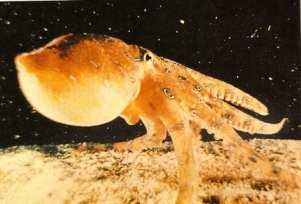
Fig. 29.8
Blue Ringed
Octopus
This dangerous little animal should
not be handled.
Treatment
Artificial respiration
must be continued until recovery
(4 – 12 hours)
. This is necessary
because of the respiratory muscle paralysis. Basic life support is needed (Chapter 42)
A
pressure bandage
and
immobilisation
(see later) should be applied promptly to delay
spread of the venom, and maintained until full resuscitation measures are implemented.
Case Report 29.2.
A diver found a small octopus with attractive iridescent blue rings - hiding in a shell. She
placed it under her wet suit vest, intending to show it to her companion later. After the dive she complained of
double vision and respiratory difficulty. When she showed the octopus to her buddy, the buddy correctly
diagnosed the problem and kept the victim alive by mouth to mouth respiration until hospital was reached. The
victim later pointed out that she was not encouraged by comments such as "it looks as though she is not going to
make it " from bystanders who had not realised that she was fully conscious, in spite of being paralysed.