Basic HTML Version


Chapter 4 — 2
infections, hypothermia, panic and fatigue, cardiac disorders and the drowning syndromes.
These are discussed in the chapters dealing with scuba diving medicine.
In an Australian series of snorkeling deaths, the causes were dominated by drowning (45%),
Cardiac disease (30%) and hypoxic blackout (20%). The first two were mainly in aquatically
unfit, older tourists, and the last in younger, aquatically fit and experienced free divers. The
inevitable predominance of time on the surface makes the breath-hold diver more susceptible to
sunburn, boat injury and tidal currents.
The other problems more associated with breath-hold divers are discussed here.
Lung Squeeze
(Pulmonary Barotrauma of
Descent)
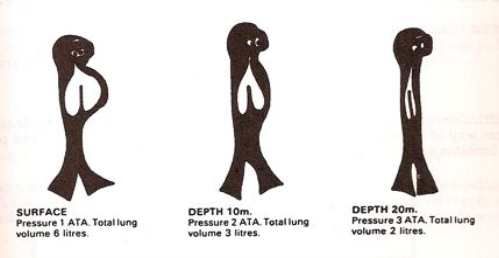
During a breath-hold dive the chest and lungs are compressed by the increasing pressure of
water. As the air in the lungs is compressed, the volume is replaced to a limited degree by
expansion and engorgement of the lung's blood vessels. Lung injury from this mechanism is
known as lung squeeze, or pulmonary barotrauma of descent (see Boyle's Law, Chapter 2).
Fig. 4.1
Theoretically, the maximum safe depth for most divers should be about 30 metres (4ATA), but
it probably varies between individuals, as much deeper breath-hold dives have now been
performed - in excess of 200 metres.