Basic HTML Version


Chapter 5 — 2
Some face masks are fitted with a one-way exhaust or “purge” valve on the undersurface to aid
elimination of water. This makes clearing the mask of surplus sea water much easier, but the valve
can be an annoying source of water leakage into the mask, if it does not function correctly. Another
source of leakage is a moustache or beard. These are still able to permit a seal if adequately wetted
beforehand.
The body of the mask may be made of plastic, rubber, or silicone. The material needs sufficient
rigidity to maintain the basic shape of the mask but a soft flanged edge (or skirt) is necessary to allow
the mask to adapt to the contours of the face and provide a watertight seal. If the mask is excessively
rigid it will not accommodate to water pressure changes, making face mask squeeze more likely.
Masks made of silicone rubber are available for use – essential for divers with rubber or plastic
allergy.
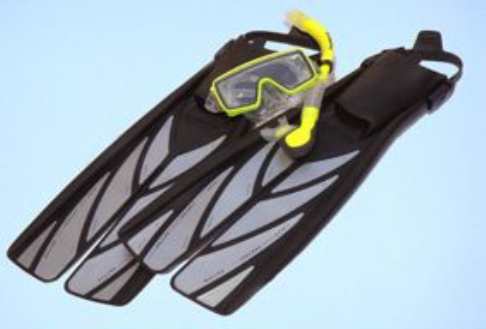
Fig. 5.1
Mask, snorkel and fins – basic free diving equipment
The viewing plate of the mask can be made of either glass or plastic.
Masks, like the windscreens of cars, should be made of “tempered “ or
safety glass, thereby preventing shattering and damage to the face and
eyes, in the occasional event of trauma. Then it will shatter into small
cubes rather than sharp splinters when broken. Good quality plastic is
less likely to break, but is prone to scratching