Basic HTML Version


Chapter 5 — 17
Closed circuit mixed-gas rebreathing systems are used in technical and deep diving operations. These
are further described in Chapter 43, but are not recommended for use by other than very experienced
and meticulously trained divers.
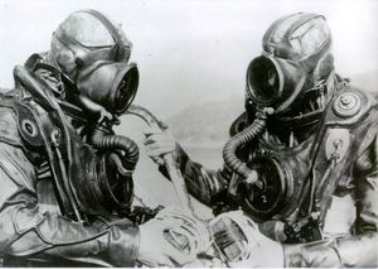
Fig. 5.19
Military diver wearing oxygen rebreathing sets.
ANCILLARY DIVING
EQUIPMENT
Buoyancy Compensator,
Buoyancy Vest, B.C.
This device was originally devised as a modified life jacket to provide emergency flotation for the
diver at the surface. Its value in compensating for changes of buoyancy due to wet suit compression
with depth, was realised and it was modified to allow the gas content to be varied during the dive,
depending on the buoyancy needs. It was also variously called a B.C.D. or B.C.V. (buoyancy
compensating device or vest) or A.B.L.J. (adjustable buoyancy life-jacket)
Desirable features.
When inflated the B.C. positive buoyancy should be sufficient to offset the
negative buoyancy of the submerged weight of the diver and his equipment. It should support an
unconscious diver so that his face is clear of the water. Ten kilograms (22 lbs) of buoyancy is more
than adequate to achieve this. Most B.C.'s have excess capacity.
The B.C. should have a means of oral inflation, as well as a means of manually inflating with gas
from a compressed air cylinder. With modern B.C.s the latter usually takes the form of an auxiliary
"direct low pressure feed" line from the first stage or reducing valve. This direct-scuba-feed allows