Basic HTML Version



Chapter 5 — 21
Contents Gauge
It is essential to monitor the air content of the scuba tank during a dive, to allow a sufficient air
reserve for return to safety, emergency use and for decompression.
The pressure observed in the contents gauge overestimates the air available, because a substantial
pressure is required just to drive air through the regulator. Thus something like 40 Bar should be
deducted from the reading to calculate the remaining air available for the dive.
"Reserve" valves are not adequate substitutes
for contents gauges since they may be
inadvertently opened before or during the
dive, and have been observed to leak or fail
under operational conditions.
To gain maximum advantage from the
contents gauge the diver should refer to it
frequently, and should be aware of the values
in respect to his own diving air consumption
at that depth.
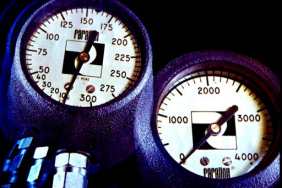
Fig. 5.21.
Depth and contents gauges (calibrated in feet of sea water and psig,
respectively).
Alternate Air Source
The
octopus regulator
is a second-stage demand valve which can be used by the diver in the event
of failure of the main demand valve, or which may be used by another diver who has an equipment
failure or air exhaustion. The hose for the octopus or second reg. is longer than the primary reg so
that it can be used easily by the OOA/LOA (out-of-air, low-on-air) diver. This facility eliminates the
need for buddy breathing from a single demand valve, which can be difficult and dangerous to
perform in high stress situations or between inexperienced divers.
Obviously, two divers using the same
scuba system will halve the endurance of
the tank. An alternative is to carry a
complete separate emergency "
spare
air
" unit with an adequate supply of air
to reach the surface. At depth, and with a
low tank pressure, insufficient air may
be available for simultaneous use of the
demand valve and the octopus regulator.
Other alternative air sources include twin
scuba cylinders (and independent
regulators) and air breathing from a B.C.
supply.
Fig. 5.22
A Spare Air unit