Basic HTML Version


Chapter 31 — 2
Function of the Vestibular System
The balance or vestibular system comprises two marble-sized structures located in the skull
above and behind the middle ear space on either side of the head. Each vestibular apparatus
has two parts. Abnormalities of either cause vertigo and disorientation. They are:
!
A system of three interconnecting tubes (semi-circular canals).
These are aligned at right angles to each other and filled with fluid. They detect movement in
all three planes. If the body rotates, the fluid in these three canals tends to lag behind, due to
its inertia. The differential movement of the body and the fluid is detected by nerve endings –
hair like projections into the fluid (hair cells) at the base of each canal.
The semi-circular canals are located close to the ear
canal. Cold water entering the ear canal can cool them
slightly, causing convection currents in the fluid. The
movement of the fluid is detected by the hair cells
and, if this does not synchronise with stimuli from the
other side, causes vertigo. This is termed
caloric
induced vertigo and is usually associated with the
diver being in a near horizontal position
.
Fig. 31.1
!
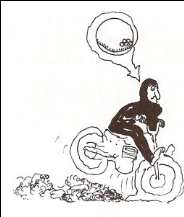
The Otolith organ.
These other fluid-filled structures have a viscous base which contains minute calcium
granules. Hair like projections of nerve cells penetrate this gel and detect any movement of
the granules. Because of their weight, the granules tend to move in response to
gravity
and
acceleration
. The hair cells detect this and continuously inform the brain about which way is
up and the direction of any acceleration.
Pressure changes can cause
barotrauma
induced vertigo, and it is possible that this could be
due to stimulation of the otoliths or the semicircular canals and is usually associated with the
diver being in a more vertical position.
Fig. 31.2