Basic HTML Version


Chapter 3 — 2
RESPIRATION
Anatomical Structure
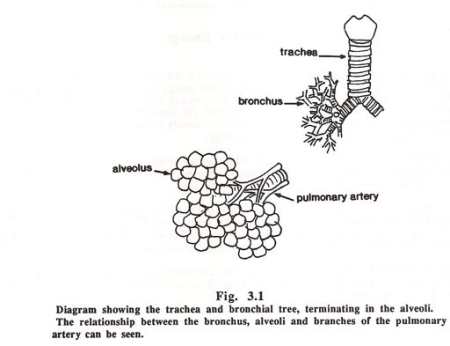
The respiratory tract begins at the mouth and nose and ends in the microscopic air sacs called the
alveoli
,
in the lungs.
The
nose
, apart from its decorative function, warms and humidifies the air that we breathe. It
also filters large particles which might otherwise be inhaled. If the nose is bypassed by breathing
through the mouth, a snorkel or scuba regulator, the lung then has to cope with drier, colder,
unfiltered air.
After passing through the mouth or nose, the air then enters the throat where the
larynx
(or voice
box) is situated. This is recognised as the "Adams Apple". The larynx produces the sounds of
speech as well as helping to protect the lungs from inhalation of foreign material.
When sea-water from a flooded snorkel or scuba regulator enters the larynx, a trap-door like
structure called the epiglottis closes over the opening and the vocal cords shut to prevent the
foreign material from entering the lungs. If any material passes these structures, the cough reflex,
activated by foreign material touching the inside of the air passages, may cause a
coughing
reaction which tends to expel whatever has been inhaled.