Basic HTML Version


Chapter 1 —
1
Chapter 1
All chapters, full text, free download, available at
http://www.divingmedicine.info
HISTORY of DIVING
Historians are unable to identify the first divers. Probably the techniques they used were similar
to those of the native pearl and sponge divers. They may have used a stone weight to ensure
rapid descent, but it is unlikely that they could dive deeper than 30 metres, or spend longer than
2 minutes underwater. Later, diving was employed for military purposes (such as destroying
ships anchoring cables, boom defences, etc.) and for salvage work. Divers took part in great
naval battles between 1800 BC and 400 BC. Alexander the Great was said to have descended in
a diving bell (circa 330 BC) but the details are scarce and some of the stories of the descent are
fanciful.
Commercial diving evolved through the 19
th
and 20
th
centuries and encompassed salvage and
shell diving, extending into exploration, deep diving, off shore oil rigs, aquaculture, ecology
and most importantly for you – recreational diving.
The history of diving evolved in two directions. The first is the development of diving
equipment – described in this chapter. The second is the understanding of diving physiology
and medicine – described in the rest of this text.
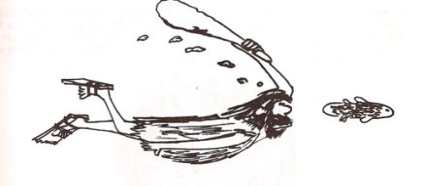
Fig. 1.1
A Roman historian, Pliny, recorded the earliest use of surface supplied breathing air by divers
in AD77, when a breathing tube connected the diver to the surface. This possibly represents an